Racial Characteristics and Attitudes of the Millennial Generation

It seems that every successive generation of Americans has to have a name or label. I’m sure you’re already familiar with the “Baby Boomer” generation that was born in the two decades after World War 2. Most have presumably also heard of “Generation X” (to which I belong), who were born between 1965 and 1980.

Most recently, we have the “Millennial” generation — those born between 1981 and 2000. Growing up in the age of computers, the Internet, cellphones, social networking, and multimedia proliferation, in many ways the Millennials represent a milestone generation within American society. To capture and describe some of their characteristics, the Pew Research Center recently conducted a series of reports on various demographic and cultural traits and attitudes of this generation. Below are some highlights of their report that relate to the cultural and racial/ethnic views and composition of the Millennial generation:

They are the most ethnically and racially diverse cohort of youth in the nation’s history. Among those ages 13 to 29: 18.5% are Hispanic; 14.2% are Black; 4.3% are Asian; 3.2% are mixed race or other; and 59.8%, a record low, are White.

They are starting out as the most politically progressive age group in modern history. In the 2008 election, Millennials voted for Barack Obama over John McCain by 66%-32%, while adults ages 30 and over split their votes 50%-49%. In the four decades since the development of Election Day exit polling, this is the largest gap ever seen in a presidential election between the votes of those under and over age 30. . . .

They are the least religiously observant youths since survey research began charting religious behavior. . . .

Acceptance of interracial dating by generation © Pew Research Center

The graph shows the percentage approving of interracial dating for each of four cohorts (or generations), tracking their responses across the 13 separate waves of polling between 1987 and 2009. Several things are evident from the graph. One is that there is an upward trend in acceptance of interracial dating in most cohorts as time passes. . . .

Another conclusion from the graph is that each younger cohort is more supportive than the cohorts that preceded it. Baby Boomers were more supportive in 1987 than members of the Silent Generation, and remained that way throughout. Generation X (at 82%) was more supportive than the Baby Boomers when it first appeared in the surveys. And the Millennial cohort is the most supportive of all.

The part of the Pew reports about the racial/ethnic composition of the Millennials was not surprising, although I expected the proportion Asian American to be a little higher. Nor am I surprised that the Millennials tend to be the least religious of all the generations, although I expect their levels of religious participation to increase as they get older.

I am also not surprised that the Millennials are the most supportive of interracial dating, as the graph illustrates. However, in looking at the graph, it shows that somewhere around 2007, the approval rates for interracial dating actually declined slightly for Baby Boomers, Generation X, and the Millennials. Further, at this point, we do not yet know whether the approval rate for interracial dating will continue to decline, or whether it will rebound and continue its upward trajectory.

I find this recent development a little perplexing, particularly considering that was when Barack Obama, the child of an interracial couple, began his rise in popularity on the way to the Presidency. I am left to wonder, could it be due to the subtle rising White backlash against the increasing levels of racial/ethnic diversity in this country?

In other words, as I’ve written about before, starting even before Barack Obama’s rise in popularity and even accelerating ever since, there were indications, events, and incidents that showed how racial/ethnic relations in the U.S. were becoming increasingly polarized, with a rising group of White Americans increasingly feeling resentful and threatened by such demographic and cultural changes taking place in “their” community and “their” country.

If that is indeed the case, the Millennial generation indeed represents a watershed moment in the evolution of American society. On the one hand, they might replicate the racial/ethnic and cultural splintering of the country that may lead to the de facto split of American society into a White part and a non-White part. On the other hand, the Millennials have the opportunity to draw upon their shared institutional beliefs and cultural practices and help the country heal its racial/ethnic divides and lead us toward coalescing into a true multicultural nation.

I believe that this will be the primary challenge — and ultimate legacy — of this Millennial generation.

Dr. King, Race, Politics, and a Colorblind Society

Today we celebrate Dr. Rev. Martin Luther King Jr.’s birthday and legacy as a national holiday. I would like to use this occasion to reflect a little bit on one part of Dr. King’s dream and how far we have come toward accomplishing it.

Specifically, I refer to Dr. King’s wish that one day soon, we would live in a society in which, as he eloquently put it, people “would be judged not by the color of their skin but by the content of their character,” a vision that we commonly refer to as a “colorblind” society. This ideal has remained an ultimate goal for many in American society, from a wide variety of racial and ethnic backgrounds. But are we there yet? How close are we to achieving that dream?

Martin Luther King Jr. © Howard Stroman

Many Americans thought that Barack Obama’s election was the culmination of Dr. King’s dream and concrete proof that we have evolved into a “post-racial,” colorblind society. Unfortunately, as I and many other sociologists and commentators have argued, even in this past year, we have seen numerous incidents that illustrate just how prevalent racial distinctions and racism still are in American society.

As another example, just recently, there was the uproar over Senator Harry Reid’s comments from the presidential campaign that Barack Obama had a good chance of being elected because he was “light-skinned” and had “no Negro dialect, unless he wanted to have one.” Many conservatives charged that Senator Reid’s comments were racist and that similarly due to the racist comments uttered by former Senator Trent Lott, Reid should resign. Others pointed out that conservatives were being hypocritical in pointing out this particular example of “racism” while basically ignoring other examples of racism directed toward Barack Obama over the past few years.

Similarly, others like Professor Joe Feagin point out that Harry Reid was just verbalizing an implicit reality that still operates within American society — the “backstage” racism that still exists among many White Americans who are reluctant or unwilling to vote for an African American candidate (or even any candidate of color) unless that candidate looks and acts as “White” as possible.

The point of these examples is to illustrate that in contrast to what many Americans had hoped, unfortunately we are not yet close to living in a colorblind society. While Dr. King’s dream remains the ideal, the realities of the U.S. racial/ethnic landscape are quite different.

With this in mind, I would also argue that allies and supporters of anti-racism and racial equality should accept this reality, that race is still a significant marker of differentiation in our county, rather than naively proceeding with the assumption that being colorblind is the best approach within this context.

In other words, many Whites (and other Americans of different racial/ethnic identities) try to fight back against racism by trying to be colorblind in their daily lives. They try to treat everybody they meet, interact with, or hear about, solely as an individual rather than as a member of a racial group. They genuinely believe that ignoring race is the best way to move forward toward a colorblind society. Even worse, many Americans who otherwise consider themselves “progressive” criticize people of color for “obsessing” over race and that we somehow create our own oppression by recognizing race.

While trying to be colorblind is indeed a noble and well-intended idea on the individual, interpersonal level, the problem is that the idea of colorblindness is not reinforced on the institutional level and therefore, it is just not practical given how American society continues to be racialized, as I described above, and how racism continues to largely operate independently of individual motivations. In other words, ignoring the problem will not make it go away, nor will it solve anything.

As many educators point out, if anything, trying to be colorblind only makes racism worse because people then mistakenly and naively believe that all forms of racial inequality and discrimination have been eliminated, that everybody is now on an equal playing field with equal access to all social opportunities, and that American society is a true meritocracy.

More generally, the fundamental problem is not racial differences themselves. Instead, the root of racism is that certain racial markers or characteristics have been assigned institutional value judgments of “good” versus “bad,” “normal” versus “abnormal,” and “human” versus “sub-human.” This process has led to certain racial groups being privileged and systematically advantaged over others. Or in the words of Audre Lorde, “It is not our differences that divide us. It is our inability to recognize, accept, and celebrate those differences.”

Ultimately, the best way for us to work toward achieving the ultimate colorblind ideal is to recognize, accept, and understand that racial distinctions still matter and that they are still the basis for continuing discrimination and inequality in American society today. Only by doing so will we move forward on achieving Dr. King’s final ideal — true racial equality.

Racial Contradictions in College Basketball

First, I hope everyone had a nice holiday season and that your new year is off to a good start.

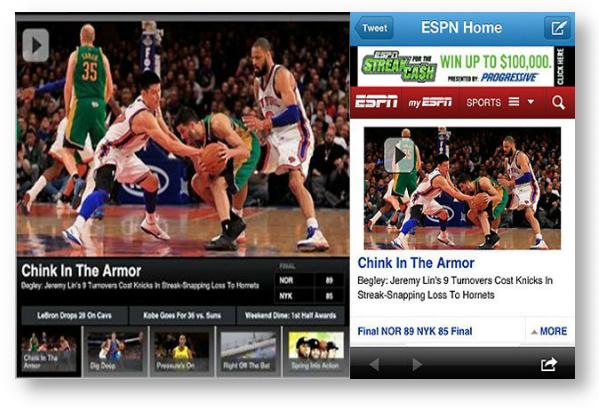
As reflected in the origin of its name (Janus, the Roman god of beginnings and endings), the first month of the new year is traditionally a time to reflect on two “opposite” ideas. In this case, I’d like to use a recent Time magazine article profiling Harvard University basketball player Jeremy Lin as an opportunity to explore opposing and contradictory racial presumptions in college and professional basketball.

Jeremy Lin © Harvard University Athletics

First, the article describes the success Jeremy is having as Harvard’s star player:

It’s been 64 years since the Crimson appeared in the NCAA tournament. But thanks to senior guard Jeremy Lin, that streak could end this year. Lin, who tops Harvard in points (18.1 per game), rebounds (5.3), assists (4.5) and steals (2.7), has led the team to a 9-3 record, its best start in a quarter century.

Lin, a 6 ‘3″ slasher whose speed, leaping ability, and passing skills would allow him to suit up for any team in the country, has saved his best performances for the toughest opponents: over his last four games against teams from the Big East and Atlantic Coast Conference, two of the country’s most powerful basketball leagues, Lin is averaging 24.3 points and shooting nearly 65% from the field.

“He’s as good an all-around guard as I’ve seen,” says Tony Shaver, the head coach of William & Mary, which in November lost a triple overtime game to Harvard, 87-85, after Lin hit a running three-pointer at the buzzer. “He’s a special player who seems to have a special passion for the game. I wouldn’t be surprised to see him in the NBA one day.”

I think it’s important to first recognize Jeremy’s success. He’s worked hard academically and athletically to be in the position he’s in right now. In many ways, he represents a nice example of how Asian Americans can balance both model minority expectations with a physical or extracurricular passion on the way to a well-rounded sense of personal balance.

The article later acknowledges the elephant in the room and points out why Jeremy’s success is unique — he’s Asian American. Unfortunately, he’s also experienced some racism from opposing fans based on his racial identity:

A Harvard hoopster with pro-level talent? Yes, that’s one reason Lin is a novelty. But let’s face it: Lin’s ethnicity might be a bigger surprise. Less than 0.5% of men’s Division 1 basketball players are Asian-American. . . . Some people still can’t look past his ethnicity. Everywhere he plays, Lin is the target of cruel taunts.

“It’s everything you can imagine,” he says. “Racial slurs, racial jokes, all having to do with being Asian.” Even at the Ivy League gyms? “I’ve heard it at most of the Ivies, if not all of them,” he says. Lin is reluctant to mention the specific nature of such insults, but according to Harvard teammate Oliver McNally, another Ivy League player called him a c-word that rhymes with “ink” during a game last season.

Just last week, during Harvard’s 86-70 loss to Georgetown in Washington, D.C., McNally says one spectator yelled “sweet and sour pork” from the stands. In the face of such foolishness, Lin doesn’t seem to lose it on the court. “Honestly, now, I don’t react to it,” he says. “I expect it, I’m used to it, it is what it is.”

It would be simple enough to point out the obvious contradiction in Jeremy’s situation — why is it apparently acceptable (or at least tacitly tolerated) to hurl racial slurs at an Asian American basketball player but not at say, African American players?

How would bystanders, teammates, coaches, security personnel, and even opposing players react if a fan in the stands yelled the N-word at a Black basketball player at a game? Chances are, that “fan” would immediately face backlash and would be ejected from the building faster than you can say “codes of conduct.” In fact, Dartmouth recently issued an official apology to Harvard in the wake of anti-Semitic and homophobic slurs hurled at some of its squash players at a recent match.

But in Jeremy’s case, there doesn’t seem to be any sense of collective backlash or outrage over the racist comments he routinely receives on the court. Apparently it’s another sad example of Asian Americans being seen as the invisible minority, perpetual foreigners, or as easy targets for racism.

But beyond that, I have to wonder whether his status as an Asian American — as opposed to an Asian — player plays a role as well. In other words, we have seen an influx of professional athletes from Asia in basketball (Yao Ming, Yi Jianlian) and baseball (Hideo Nomo, Ichiro, Daisuke Matsuzaka, etc.) recently but unfortunately, there is still a glaring underrepresentation of Asian American professional athletes in the highest-profile sports such as football, basketball, and baseball.

Although it’s a documented fact that many Americans can’t or won’t distinguish “Asians” from “Asian Americans,” my question is, are Americans (or in this case, sports fans) likely to accept Asian athletes more readily than Asian American ones?

Perhaps fans consciously or unconsciously are more comfortable with the idea that Asian athletes are likely to remain “foreigners” and therefore will eventually return to “their own” country and won’t settle down in the U.S. and be in direct competition with Americans for jobs, etc., while Asian American athletes are in fact homegrown and are perceived to be a greater economic “threat” to “real” Americans. After all, many already perceive Asian Americans to be “taking over” other areas of American life such as colleges and universities.

So based on these perceptions, perhaps fans are unconsciously spewing racism — or at least remaining silent when such slurs are made — at Asian American athletes as another form of backlash against the ongoing socioeconomic success of Asian Americans.

The mentality and contradictions of racism are always subject to speculation but the examples keep adding up.

Racial/Ethnic Relations in 2009: The Best & Worst

As we near the end of 2009, it’s fitting to review the major events, developments, and trends in U.S. racial/ethnic relations in 2009. Therefore, below is my look back at some of the positive highlights as well as the setbacks in terms of achieving racial/ethnic equality, with a particular focus on Asian Americans (my area of expertise). This list is not meant to be an exhaustive review of all racial/ethnic news in 2009, but rather the ones that I covered in this blog and ones that I believe have the most sociological significance.

The Best

The Worst

As we turn the page on 2009 and the entire decade (one that many Americans would like to forget), let’s hope that 2010 and the new decade will lead to more prosperity, equality, and harmony for Americans from all racial, ethnic, and cultural backgrounds.

Escalation of Student Racial Violence in Philadelphia

Back in September, I wrote about a pattern of racial violence between predominantly African American and Asian American groups of students in schools in the South Philadelphia area. Unfortunately in recent weeks, the violence seems to have escalated, as described in the news video segment below:

My fellow Asian American blogger Angry Asian Man has done a nice job of covering these events and chronicling the developments that include large numbers of Asian American students boycotting classes last week and an emotional emergency meeting of students, parents, community leaders, and school officials in which students described in detail the brutal nature of such attacks.

In my previous post, I covered the sociological background of these kinds of racial violence incidents includes demographic changes taking places in many Philadelphia neighborhoods and the cultural instability that arises from having to adjust to new neighbors and a changing racial/ethnic landscape. This situation is further complicated by economic insecurity leading to scapegoating and displaced aggression on the part of the attackers.

However, there is one important point that I did not discuss in great detail in regard to these particular incidents (but did in a previous post on similar incidents of racial violence in New York City), and which the Asian American students themselves emphasized in their public testimony and descriptions. Specifically, that point is that the violence itself is bad enough. What makes it even worse is that many school officials, staff, teachers, and security personnel have repeatedly ignored the students complaints and concerns and in some cases, have even cheered on the attackers:

” ‘As soon as we open our mouths and speak, they treat us like we’re animals,’ ” Ellen Somekawa, executive director of Asian Americans United quoted a Vietnamese student. ” ‘Where are you from?’ ‘Hey, Chinese.’ ‘Yo Dragon Ball.’ ‘Are you Bruce Lee?’ ‘Speak English!’ ” Somekawa said the students are told.

Those aren’t the words of the students who harass Asians, she said. “They are the words of the adult staff at South Philadelphia High. So stop blaming the children and start owning the responsibility.” . . . The protesters carried signs, some reading: “Stop School Violence,” “It’s Not a Question of Who Beat Whom, but WHO LET IT HAPPEN” and “Grown-ups Let Us Down.” . . .

Over and over again, Asian community leaders said the real problem is “not just a bunch of bad kids,” but the school’s leadership.

Xu Lin, community organizer for the Philadelphia Chinatown Development Corp., said community members were upset during a meeting with school officials last Friday “to see the principal playing with her cell phone when the students and their parents were giving statements about the violence that had occurred the day before. We were even more offended to see the safety manager . . . sleeping during the meeting in front of the whole community.”

A number of Asian students pointed out that they have African-American friends who have helped them with their English and have been nice to them. . . At one point, a multiracial contingent of South Philadelphia High students asked the Asian students to come back to school.

It is truly sad to see that those whose job it is to promote a positive learning environment and racial tolerance are actually a big part of the problem and make such racial tensions worse. In order to effectively address this situation, we need to find those responsible for such attacks, regardless of what racial/ethnic background they are, and deal with them in a way that punishes their actions without criminalizing them and turning them into “repeat racists.”

But just as important, the school officials, teachers, staff, and security personnel who failed in their jobs to protect these students need to be disciplined as well, including being fired if necessary. I personally have no tolerance for officials who shirk their paid responsibilities and in some cases, apparently misuse their authority and actually contribute to the bullying taking place.

In the same way that we chastise and clamor for the termination of government officials who fail to do their jobs and in fact engage in various forms of misuse of power or malfeasance, these school officials and other adults involved have failed miserably in their professional duties and moral obligations and can no longer be trusted and therefore deserve to be fired.

Sometimes, it is only when you “clear house” and start from scratch that true change and healing can begin. I wish everyone involved, especially the Asian American students, the best success in resolving these differences and healing their physical and emotional wounds.

How Immigrants Contribute to American Society

We all know that immigration — legal and unauthorized — has been a hot-button topic for a while now. This is the case even before President Obama has even seriously tackled the question of immigration reform. One of the key points of contention has been whether immigrants contribute more to American society than they receive in social services.

In recent weeks, a few new studies try to shed some more light on this question and in the process, inject a little objectivity and data into an otherwise emotionally-charged debate. The first report comes from the non-partisan Fiscal Policy Institute and as described at the Immigration Impacts blog at the Immigration Policy Center, the economic contributions of immigrants constitute a net benefit for their communities:

The report studies the 25 largest metro areas (by population) which produce nearly one half of the total gross domestic product of the country. It shows that in the country’s main metropolises, the share of the immigrant population stacks up neatly against their share of economic output. For example, immigrants are responsible for 20% of economic output and make up 20% of the population in these 25 metropolitan areas. In other words, immigrants pull their own weight.

From the report: . . . “From the Pittsburgh metro area, where immigrants make up 3 percent of the population and 4 percent of economic output, to the Miami metro area, where immigrants represent 37 percent of all residents and 38 percent of economic out¬put, immigrants are playing a consistently proportionate role in local economies.”

A second newly-released report comes from the Migration Policy Institute and examines the economic impacts of unauthorized immigrants in the U.S. Again as described by the Immigration Impacts blog, the report finds that considering the costs and benefits associated with unauthorized immigrants, both cancel each other out in the end:

The overall impact of illegal immigration on the U.S. economy is small. According to [Economics Professor Gordon Hanson, the report's author], “Illegal immigration produces a tiny net gain to the U.S. economy after subtracting U.S.-born workers’ losses from U.S. employers’ gains. And if we account for the small fiscal burden that unauthorized immigrants impose, the overall economic benefit is close enough to zero to be essentially a wash.”

Enforcement against illegal immigration is expensive. The U.S. spends approximately $15 billion annually enforcing immigration laws. A simple cost-benefit analysis indicates that the high level of spending on enforcement is not justified. . . .

MPI policy analyst Marc Rosenblum and Jeanne Butterfield of the National Immigration Forum largely agreed with Hanson, but took the argument a step further, making a strong case for legalization . . . Rosenblum pointed out that the net fiscal impact of illegal immigrants improves over time—immigrants are not only workers, but consumers, entrepreneurs, and investors, and their contributions improve over time.

This particular report basically confirms earlier research that show that legal immigrants constitute a notable net gain for American society and its economy and that taken together, unauthorized immigrants also contribute more both in the short term (through paying sales taxes, income taxes, overall purchasing power, and entrepreneurial activities) and long term (by becoming productive citizens and not having to rely on public assistance).

Finally, at New America Media, a third article on the contributions of immigrants points out that as the laws currently exist, legal immigrants are prohibited from using Medicaid (the federal healthcare program for low-income Americans), even though they pay federal taxes that help to fund such programs and that in essence, recent legal immigrants are subsidizing healthcare for everyone else:

Currently, legal immigrants, who work and pay taxes that contribute to our health care system will continue to be ineligible to receive federally-funded Medicaid services for five years. In this case, we are not talking about those who make at least 133 percent of federal poverty level and could access affordability credits like everyone else for purchasing insurance in the exchange. We are talking about immigrants with the lowest incomes. It is unreasonable and saddening that under the current health reform proposals, the people who really need it will not get it.

I am under no delusions that these reports and data will change the mind of hard-core or extremist opponents of immigration (legal and unauthorized) anytime soon. Rather, for those who are willing to consider valid, reliable, and nonpartisan research, these studies are useful in wading through some of the political ideology and seeing what the actual numbers say.

With that in mind, the time for comprehensive immigration reform has come. By comprehensive, it means that we need to focus on more than just reinforcing our border with Mexico. Instead, it also means overhauling our immigration detention system, which, a new bipartisan report finds, has a long and documented history of bureaucratic lapses, with the detainees routinely denied basic rights such as being told why they are being held.

It also means providing unauthorized citizens already in country with a path toward eventual citizenship and access to opportunities to achieve social and economic mobility, such as the DREAM (Development, Relief and Education for Alien Minors) Act (currently being debated in Congress) that would allow young immigrants without legal status who demonstrate “good moral character” to apply for citizenship.

Comprehensive immigration reform is particularly relevant and important these days as American society and the world in general continues to wrestle with the benefits and drawbacks of globalization and living in an increasingly interconnected world. As a new book titled Immigrant, Inc.: Why Immigrant Entrepreneurs Are Driving the New Economy (and how they will save the American worker) describes:

Both a revelation and a call-to-action, Immigrant, Inc. explores the uncommon skill and drive of America’s new immigrants and their knack for innovation and entrepreneurship. From the techies who created icons of the new economy — Intel, Google, eBay and Sun Microsystems — to the young engineers tinkering with solar power and next-generation car batteries, immigrants have proven themselves to be America’s competitive advantage . . . [and] will create the American jobs of the future — if we let them.

That last part seems to be the key — immigrants have much to contribute to American society and our economy, if only we let them do so, rather than trying to get rid of them.

Yellowface: Different Levels of Offensiveness

As many of you presumably already know, “Blackface” is the practice of non-Blacks using dark-colored makeup or other materials to darken their face and skin so that they appear to be Black, usually for the purpose of impersonating a Black person in a public setting. The history of this practice is a long and sad one and almost always is associated with reinforcing and perpetuating racist stereotypes about Blacks. In fact, I recently wrote about a high-profile Blackface incident in Australia and commended entertainer Harry Connick Jr. (who is White) for calling it out as racist.

Similarly, “Yellowface” is the practice of non-Asians impersonating Asians in a public setting, usually by dressing them up in traditional “Asian” garments, altering their eyelids, or donning some other prop such as buck teeth, all of which again serve to reinforce and perpetuate racist stereotypes against Asians and Asian Americans.

Recently, there was a skit on Saturday Night Live (SNL) that included actor Will Forte impersonating Chinese President Hu Jintao, along with Iranian American actor Nasim Pedrad playing the role of an interpreter. The video of the skit is below:

Since Will Forte is in fact White and is portraying an Asian character, this is technically Yellowface. But the question then becomes, is this racist and offensive? I know that many Asian Americans do find this particular portrayal offensive and they certainly have a right and reason to do so.

For me however, I will go out on a limb and say that I personally don’t think this particular portrayal was that offensive. It would be one thing if SNL had an Asian male cast member who could have played Hu Jinato but was passed over in favor of Forte, but obviously this was not the case (although it would be nice if SNL eventually had an Asian American male cast member). Further, Forte’s portrayal of Hu did not include the racist characteristics usually found with offensive Yellowface portrayals.

In other words, Forte did not artificially alter his eyes or eyelids or wear traditional garments to look more “Oriental.” Nor did he use racist caricature features such as buck teeth. Further, even though Forte did impersonate Hu speaking Chinese, it was very muted and not a central part of his portrayal, as opposed to the traditional exaggerated and blatantly offensive “ching chong” artificial dialog that we’ve seen in the past.

Further, the SNL skit did not include any elements or activities that have been associated with offensive Asian characters through the years, such as performing kung fu, working as a cook or waiter, or as an evil villain. Also, Forte did not try to portray Hu speaking English with a Chinese accent, which would have been much more offensive. Further, Pedrad’s portrayal of the interpreter did not include an exaggerated Chinese accent either.

In fact, fellow sociologist blogger Lisa at Sociological Images has just compiled an excellent video retrospect of White actors playing Asian characters through the years. If you watch the videos included in her post, you will see that all of them include at least one of these offensive characteristics that I listed above.

The larger point I am trying to make is that there are different degrees of offense when it comes to Asian Americans. Regular readers to this blog know that I’ve spent plenty of time pointing out different individual- and institutional-level incidents and examples of that I have found offensive and racist toward Asians and Asian Americans. But ultimately, American society and the world in general are not simple either-or, black-or-white, yes-or-no dichotomies. Instead, we need to realize that there are varying degrees of oppression, inequality, and in this case, potentially offensive media portrayals.

Asian American actors are likely to tell you the same thing when it comes to which roles they accept or reject. As this clip from the Turner Classic Movie series “Race in Hollywood: Asian Images in Film” shows, even well-respected Asian American actors will take on roles that have them playing a sweatshop worker or one that has them speak with an Asian accent, if other aspects of their character are more nuanced and substantive:

Similarly, even Asian American writers and filmmakers have been criticized when it comes to how they portray members of their community. Relatively recent examples include when author Amy Tan and director Wayne Wang were criticized for promoting gender stereotypes in the otherwise critically-acclaimed and watershed Asian American book and movie The Joy Luck Club, or when director Justin Lin was criticized for his less-than-model-minority portrayals of Asian American high school students in another breakthrough Asian American film Better Luck Tomorrow.

In the end, yes, it would have been nice if SNL had an Asian American male cast member who could have played Hu in this particular case. But given that limitation, I did not find their skit to be nearly as offensive as past portrayals that have made me wince in disgust. Maybe this just means that I’ve been desensitized by so many blatantly racist portrayals through the years. But more likely, I think it just shows that there are different levels of offense when it comes to how Asians and Asian Americans are portrayed.

Good News and Bad News: Hate Crimes in 2008

Each year, the Federal Bureau of Investigation releases its official report on Hate Crimes in the U.S. First, a little background — hate crimes are defined as a criminal offense committed against a person or property, which is motivated, in whole or in part, by bias against the victim’s actual or perceived race, ethnicity, religion, sexual orientation, or disability, and that is formally reported to law enforcement. This definition is important in many ways, as I explain a little later.

Regarding the just-released data for 2008, in comparison to the data from 2007, there are good news and there are bad news. First, some of the good news:

  • The number of hate crimes committed against Asian Americans and Pacific Islander Americans declined from 188 incidents and 219 offenses in 2007, to 137 incidents and 162 offenses in 2008.
  • Similarly, the number of hate crimes committed against Hispanic Americans declined from 595 incidents and 775 offenses in 2007, to 561 incidents and 735 offenses in 2008.
  • The number of hate crimes committed against Muslim Americans also declined, from 115 incidents and 133 offenses in 2007, to 105 incidents and 123 offenses in 2008.

These are positive signs of progress and we should acknowledge them as such. Unfortunately there appears to be at least an equal number of bad news as well:

  • In total, the number of reported hate crimes are at their highest level since 2001. In 2008, there were 7,783 hate crime incidents and 9,168 hate crime offenses reported, an increase from 7,624 and 9,006 reported in 2007, respectively.
  • The number of hate crime crimes directed at Blacks increased from 2,658 incidents and 3,275 offenses in 2007, to 2,876 incidents and 3,413 offenses in 2008. Such anti-Black hate crimes are at their highest levels since 2001 and are pretty clear evidence that despite Barack Obama’s election, racism against Blacks is still alive and well in America.
  • Hate crimes based on sexual orientation are also at their highest level since 2001, increasing from 1,265 incidents and 1,460 offenses in 2007, to 1,297 and 1,617 in 2008, respectively.
  • Aside from the decline in anti-Muslim hate crimes, there was an overall increase in the number of hate crimes based on religious bias in general. For example, the number of hate incidents and offenses committed against Jewish Americans increased from 969 and 1,010 in 2007, to 1,013 and 1,055 in 2008, respectively.

To further put these hate crime numbers in perspective, we should note the specifics related to how they were collected. Specifically, as in years past, the vast majority of the law enforcement agencies who participated in the data collection (84.4% to be exact) reported absolutely zero hate crimes — that there were no hate crime incidents in their particular jurisdiction.

In addition, thousands of police agencies across the nation did not participate in the hate crime data collection program at all, including at least five agencies in cities with a popular of over 250,000 and at least eleven agencies in cities with populations between 100,000 and 250,000.

Many of these jurisdictions who did not participate or who reported zero hate crimes include areas in the South. I’m sorry, but I have a hard time accepting that there was only one (1) hate crime committed in the state of Mississippi, just two (2) in Georgia, and just four (4) in Alabama in 2008.

On top of this uneven and inconsistent participation and reporting on the part of police agencies, we should also note that, as sociological and criminological studies consistently point out, the majority of hate crime incidents are never reported to police at all — their victims stay silent. This is particularly true with many immigrant groups and communities of color, including Asian Americans.

That is, many victims may not be fluent in English and therefore feel that it is futile to report it to the police. They may also feel that the police would be unlikely to take their reports seriously for lack of cultural competency, or they may distrust the police entirely based on previous negative experiences with police in their area, or with corrupt police and government agencies back in their home country. Also, many victims may simply fear retaliation from the offenders if they report the incidents to police.

As you can see, the “official” data should be taken with a big grain of salt and almost surely represent an undercount — maybe even a significant one — of the real number of hate crimes committed in 2008. Unfortunately, in the quest for racial/ethnic/religious/sexual equality, American society still seems to be taking two steps forward, and two steps back.

Recession Can Lead to Better Race Relations

Many of my recent posts have described various examples in which the current recession has led many Americans — particularly Whites — to feel financially insecure and threatened. From there, they become more likely to scapegoat or lash out at others around them, particularly those who are racially or culturally different. It’s basic Sociology 101 — economic competition leads to racial hostility.

However and contrary to this established pattern, economic difficulties may also actually lead to better racial relations and harmony. How? Focusing on the situation of White and Black residents in a suburb of Atlanta, GA, a recent article from the New York Times describes:

Blacks and whites have encountered one another in increasing numbers recently in the crowded waiting rooms of the welfare office and at the food pantry, where many of both races have ventured for the first time. Struggling black-owned businesses are attracting the attention of white patrons. Neighbors are commiserating across racial lines. . . .

“Right now, a lot of white people are in this situation,” [Keasha Taylor, who is Black] said, recalling the conversation later. “We’re already used to poverty; they’re really not.” . . .

The recession hit Henry County . . . at a time when it was already struggling to come to terms with startling demographic change. In 1990, the county was almost 90 percent white. Now, as its population has more than tripled to 192,000, according to 2008 census estimates, the white percentage of the population has shrunk to 60 percent.

The county’s elected government is still all white and Republican, and some leaders and newcomers alike have tried in various ways to make local board and governments more diverse. But nothing else has worked to remove barriers as quickly as economic hardship. . . .

One reason blacks have not gained more political power is that they are not heavily concentrated in any single area in the county — the cul-de-sacs carved out of farmland and pastures in the last decade became racially mixed enclaves for the upwardly mobile. Now, the foreclosure notices and uncut lawns in those same subdivisions reinforce the notion that everyone is in the same sinking boat.

I suppose it’s like the old adage, “misery loves company.” On the one hand, it is a little sad that individuals and families apparently have to experience such turmoil for them to eventually turn to their racially diverse neighbors for support and sympathy.

But on the other hand, I personally would much rather have Americans from all racial backgrounds support each other during times of hardship than to compete against, fight with, and scapegoat each other, something that we unfortunately see too much of. It’s important to highlight how Americans from different backgrounds can put aside their “me first” attitudes and instead, draw on our common humanity to help our neighbors in times of need, as this recent NBC News clip shows:

As we approach the Thanksgiving holiday, I hope all of us as Americans are able to be thankful that people who can give sympathy, support, and assistance in times of need are out there — sometimes they just have a different skin color or come from a different country than yours.

The U.S. and China: A Love-Hate Relationship

As all the major media organizations are reporting, President Obama is in the middle of a high-profile trip to Asia, visiting many of our major allies and trading partners, particularly China. Rather than focus specifically on the political and economic policies about which he and his Asian counterparts will speak, haggle, and disagree, I’d like to take his visit as an opportunity to focus on the love-hate relationship that the U.S. seems to have with China these days.

It is undeniable that globalization has made the economies of the U.S. and China much more intertwined and dependent on each other. One result of this trend is that when the U.S. economy is struggling (like it is these days), China has resources in terms of investing in U.S. businesses and opening up markets in China for U.S. businesses to sell to, both of which help alleviate some of those struggles. For example, and as a nice “Globalization 101″ lesson, the Washington Post has an article that uses a few examples to describe U.S. companies vying for Chinese investment:

On visits to Shanghai and Beijing, Obama will encounter not simply a rising global power but a nation that is transforming and challenging the way Americans live overseas and at home, from college classrooms to real estate offices to the ginseng farms of central Wisconsin. . . .

“Years ago, it didn’t matter what we grew. They bought everything we had,” said Randy Ross, a 54-year-old former dairy farmer who has been growing ginseng since 1978. “Now we’ve got to learn how to satisfy them. They are changing us.” . . . Hate it or love it, China is a major player in American life. . . .

Meanwhile, in a state that has lost more than 160,000 (or one-third) of its manufacturing jobs in a decade, local newspapers have been running editorials praising the People’s Republic and blasting those who oppose closer trade ties or Chinese investment. “China is a friend to Wisconsin and its businesses, not an enemy in a trade war,” the Wisconsin State Journal said in an editorial.

At the University of Wisconsin in Madison, Chinese undergraduates now account for more than half of the 1,109 Chinese students there. That increase is another sign that China is coming because Wisconsin, like many state schools, doesn’t provide scholarships for international undergrads. Last year, Chinese students paid out $2 billion in tuition nationwide. “That money is keeping some American colleges alive,” said Laurie Cox, who runs the international student center at the Madison campus.

The Washington Post article lists several other ways, many just using businesses in Wisconsin as examples, that Americans and American companies have become dependent on China. In reading over these accounts, one might conclude that to a certain extent, many Americans see China as an “economic savior,” without whom they would be much worse off.

On the other hand, we can contrast those positive sentiments with other, more negative assessments and suspicions about China’s impact on the U.S. I’ve already written Americans being upset towards China for unsafe consumer products, human rights abuses, and allegations of spying and espionage.

More specifically, within this same process of China investing in U.S. companies, many Americans allege that the main reason China is doing so is to take them over and use them to eventually dominate and “take over” the U.S. economy. These suspicions were illustrated loud and clear in a CBS 60 Minutes segment from April of 2008 (entire episode is below, about 12 minutes long):

As I mentioned, these suspicions about China’s “real” intentions are opposite sides of the same coin and are great illustrations of the love-hate relationship that we Americans have with the Chinese. We love their money and their 1.3 billion consumer market, but we hate that their money might lead to them having a say in how our business is run or may eventually lead to them taking over the business completely (this is sometimes referred to as the “New Yellow Peril.”)

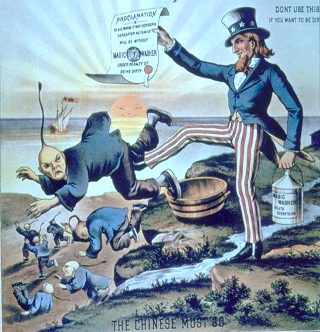
In fact, this kind of love-hate relationship that the American society has with Asians, Asian Americans, and Chinese Americans is not new. Starting with when the first large-scale immigration of Chinese to the U.S. in the mid-1800s, reinforced through subsequent decades, and continuing these days, these kinds of contradictory sentiments have manifested themselves in different ways.

For example, mainstream American society loved our cheap labor, how hard we work, and that (at least in the past), we were relatively powerless in asserting our rights for equal treatment. But they hated that we wanted to settle here, raise families here, and that our hard work frequently resulted in us making more money.

In the past, mainstream American society and the White majority also did not want us to freely intermingle with them — that’s why they passed the Chinese Exclusion Act and various other local and state laws that restricted where we could live, what jobs we could work in, and who we could marry. Such rampant hostility forced many of us to live in segregated ghettos as a matter of survival. But at the same time, they also criticized us for congregating in our own ethnic communities and accused us of not wanting to assimilate and to be American.

Fast forward to today and the same kind of cultural schizophrenia still exist in regard to the relationship between Asians/Asian Americans and the rest of American society and the White majority. The most visible example seems to be simultaneous hopes and fears over China’s investment in the U.S. economy. Such contradictions are also seen when Asian Americans are both praised and criticized for supposedly being the “model minority.”

Alas, this seems to be the consistent pattern in terms of the relationship between Asians/Asian Americans and the rest of American society — two steps forward, one step back.